
It’s easy to be oversold and undersold on creative work.
Picking a creative partner for your business is a lot like shopping for a car: the small SUV, the exotic sports car, and everything in between. Most businesses end up at the wrong end of that range.
The oversold version is familiar. A website with more pages than the business can populate. A brand identity system built for a company ten times the size. A full photography package for a business that sells on reputation, not aesthetics. It looks impressive. It doesn’t move the needle.
The undersold version is just as common. A template that could belong to any business in any industry. A logo that was cheap because it took ten minutes using AI. Creative work so generic that a stranger can’t tell what makes this business different from the one next door.
What we do is figure out where your business actually sits on that range, and build creative work that fits it. Not necessarily the most impressive or affordable one. The right one.
Every engagement starts with a plan.
Creative work fails when it gets built before anyone has asked the right questions. What does this business actually need to accomplish? Who is it trying to reach? What does it already have that’s worth keeping? What’s the budget, and what will genuinely return on the investment?
We don’t start designing until we understand the answers. Every engagement, regardless of scope, begins with a conversation about what needs to exist and why. Sometimes that produces a long list. More often it doesn’t. A single well-built landing page can outperform a ten-page website if it’s the right tool for the job. A clean, considered logo can do more for a business than a full brand system it doesn’t have the capacity to use.
The scope of what we build ranges from logos and brand materials to full websites, copywriting, print, social assets, photography, and video. What gets built in any given engagement is determined by what will actually serve the business, not by what’s most impressive to present in a proposal.

The right creative fit exists for every starting point.
Some clients come to us with a full creative suite they can’t use. A website with sections that have never been updated. Brand guidelines so detailed that nobody looks at them. Assets built for a version of the business that no longer exists. The work isn’t bad. It just doesn’t fit the business it was built for anymore.
Others have the opposite problem. A website built for the budget rather than the business. A logo designed in an afternoon. Marketing materials that look like they could belong to any company in any industry. The business has outgrown what the creative communicates, or it never had a strong foundation to start with.
Whether a business is starting from scratch or working with creative that no longer fits, the process is the same. Understand what’s actually needed, and build that.
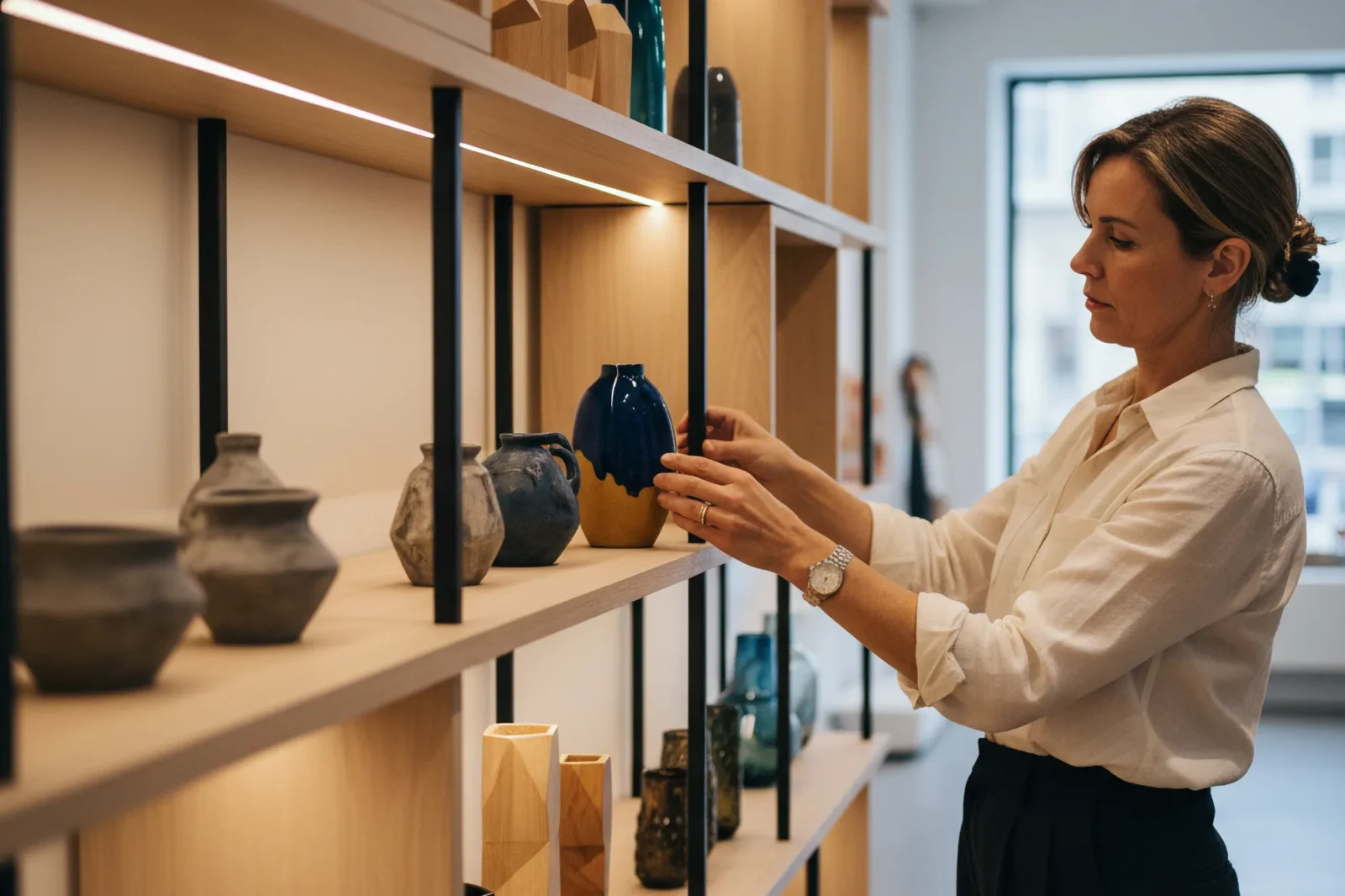
AI is part of our toolkit. Knowing when to use it is the whole job.
AI has changed what’s possible in creative work and what it costs. Assets that once required hours of skilled production can now be generated in minutes. For some tasks, that’s a straightforward win. For others, it produces exactly the kind of generic, indistinguishable output that ends up in the undersold category.
The difference isn’t whether AI was used. It’s whether the right judgment was applied. A well-directed AI asset, reviewed and refined by someone who knows what good looks like, can be indistinguishable from traditionally produced work and cost significantly less. An AI asset produced without that judgment looks like exactly what it is.
We use AI where it makes sense and human creativity where it doesn’t. That call gets made based on what the work actually needs: the audience, the impression it needs to make, the budget. The result is a broader range of solutions at more accessible price points, without cutting corners where quality matters most.
Five disciplines.
One direction.
Strategy
We audit your presence, identify opportunities and define what needs to change before you spend another dollar.
Presence
Your reputation, brand, listings & website. How your business shows up, built right and kept accurate over time.
Creative
Branding, websites, graphic design & media your business needs to make the right impression, every time.
Growth
SEO, AEO, directory management, advertising, and social. We match the channel to the strategy, not the other way around.
Tech
CRM, automations, AI workflows, and custom infrastructure. The plumbing that makes everything actually work.

Let’s find the right creative fit for your business.
We start with a conversation. No pitch, no pressure. Just an honest look at where your business is and what creative work would actually serve it.